Sunday, November 6, 2011

Cultural Day November 3

Last Thursday was Cultural Appreciation Day, yet another day off for Craig. The day is in celebration of the announcement of the Japanese constitution after WWII. We were expecting cultural events and looked at English webpages but couldn't find any. Some museums have discounted tickets but we've been to most of them in town so we decided to go to Osaka instead. In Osaka is Osaka Jo (castle). The castle was originally built in the early 1600's and has been destroyed numerous times. The last reconstruction was right before WWII.

Next to a modern skyscraper the castle looks pretty small but the two moats and walls are imposing.

I really should wear my glasses since I totally thought these were real. I'm not the only one, a little boy ran up and grabbed one of the birds and, I think, was a bit surprised he manged to catch it.

Instructions on how to use a western style toilet were posted in the public restrooms.


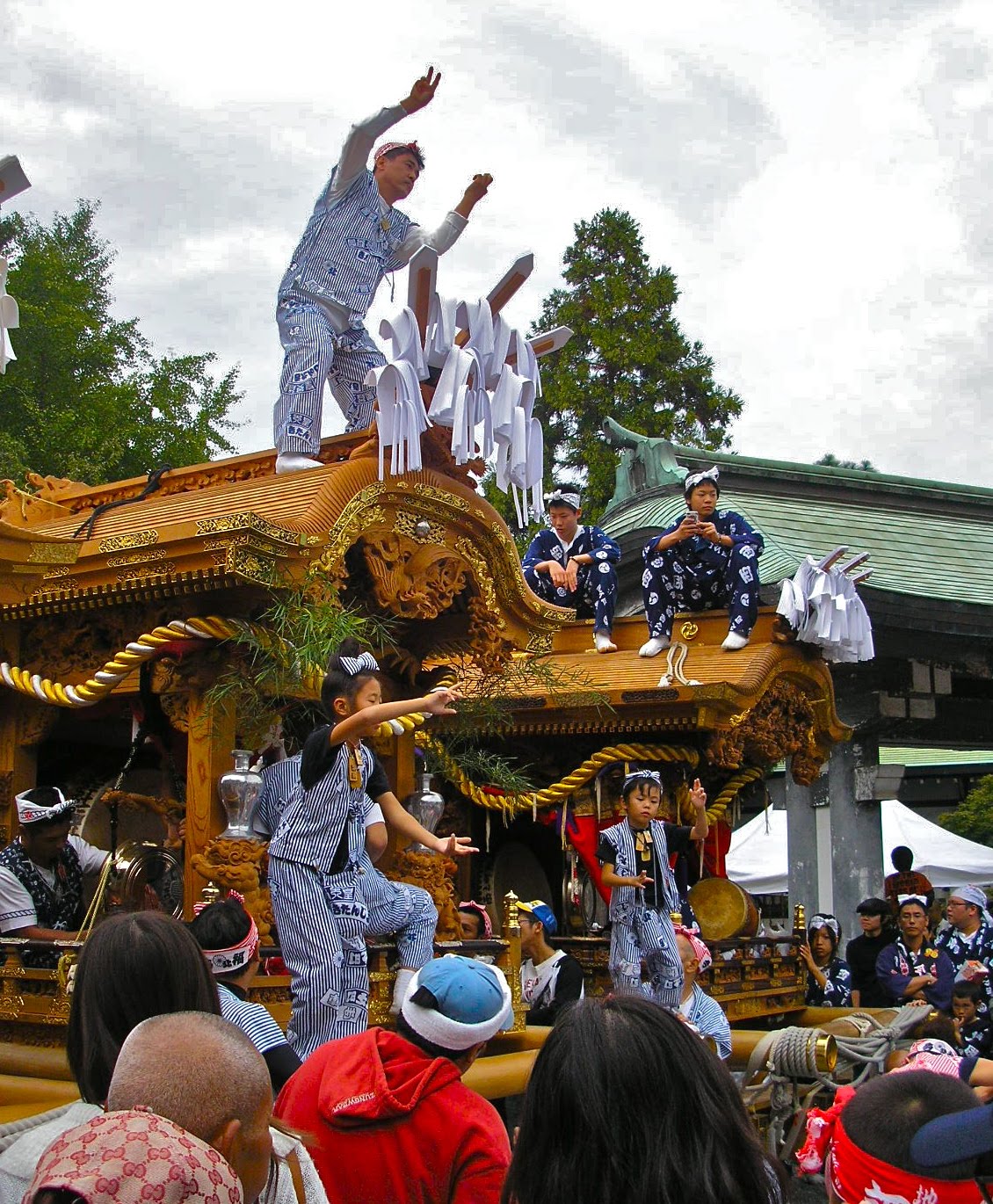
The park around the castle is beautiful. Since it was a day off there were a lot of people picnicking, playing badminton (a major thing here), fishing in the moat, and soaking in the culture. One thing Japanese people seem to love to do on holidays is have mini-parades with floats that people wearing matching outfits either carry or pull. Before the parade there was lots of traditional (I'm guessing) dancing. People even danced on top of the floats.

Two famous foods in Osaka are okonomiyaki and takoyaki. We had some delicious okonomiyaki for lunch and then some takoyaki for a snack while circumambulating the park. Craig takes his takoyaki very seriously.
The outside of the museum was built to look as accurate as they could make it based on historical records but the inside is a modern museum. It was totally not worth it. Going to the park and seeing the castle was great but the museum was lacking. There was about 5 facts that were repeated over 8 stories.

Kyoto with Sakamoto-sensei

In Kobe there is the Kobe International Community Center. One of the services they provide is free weekly one-on-one Japanese lessons. Craig and I have both been going there. My tutor is named Sakamoto-sensei. She is really great. Craig's tutor doesn't speak English so all they do is study from a book, but Sakamoto-sensei speaks English and is happy to answer my questions. She is the person who explained the mystery of whether we were eating animal or vegetable, she translated some English into Japanese for me so I can make fliers advertising my English tutoring skills, and she even recommended a good Japanese shampoo.
A while ago I brought her a flier that had something to do with an exhibit of works by impressionists and post-impressionists that came from the Washington D.C. National Gallery. She explained to me where and when the exhibit was happening and, also being a lover of the arts, volunteered to go with me to Kyoto to see the exhibit. We went on a beautiful Thursday in October. It was so nice to go with someone who could read all the signs and understand all the announcements. Craig and I get along just fine but I think we both suspect we're never doing anything in the most straight forward way.

Here we are outside the museum. It was actually a pretty small collection but all were quite beautiful and, because I couldn't read the info on the sides of the paintings, I really did just study the paintings. Sakamoto-sensei has traveled a lot and has been to France a number of times. She pointed out the places she had been that had also inspired various paintings.
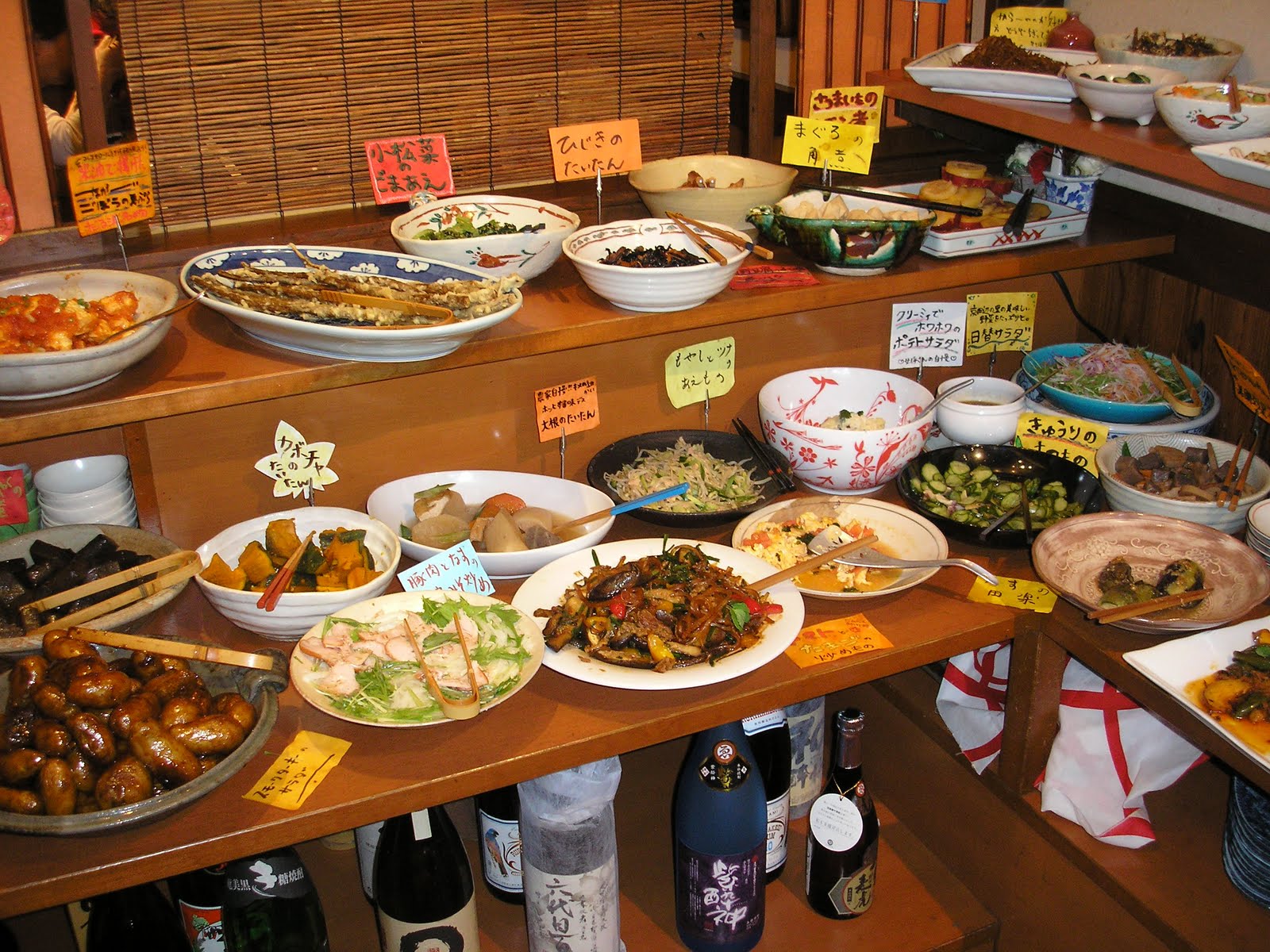
After the museum we went to lunch. She had done some research and had discovered a famous Japanese buffet restaurant. I teased that the owners would see an American walk in and panic I'd eat all their profit margin. The food was what she described as "Japanese mama cooking." It was all really good. No sushi and there wasn't much that was fried. The dishes had lots of veggies and some fish. A lot of it I would describe as salads. There were foot long pieces of gobo (burdock root) that was battered and fried (I think the only fried food there). I had no idea if you were supposed to use chop sticks to eat it but Sakamoto-sensei used her fingers so I knew that was the proper way to do it.

After lunch she showed me around some of the shrines and temples in Kyoto. Craig and I had been there before but it was nice going with someone who knew more about the area. For instance, on the walk up to one temple there are a bunch of sweet shops that Craig and I had ignored. Turns out they give out crazy amounts of free samples so I got to try banana flavored mochi with azuki paste and regular mochi with chocolate - I preferred the chocolate. In one of the temples there was an exhibit of paper cutting art that was amazing. The artist created these really complicated scenes that would include details like whiskers on cats or steam rising from a bowl of soup all by cutting up a single piece of paper. After all the walking around we decided we deserved some dessert for our dinners (we had each told our husbands they were on their own for dinner that night). Afterwards we caught a train back to Kobe.

I know I've said it before but I'm going to keep saying - I owe a lot to people like Sakamoto-sensei who are willing to volunteer their time to teach or simply answer my questions and I totally have to pay-it-forward and volunteer myself when we get back to the states.

Sunday, October 30, 2011

Kobe Biennale Oct 19, 21, and 25

I kept seeing pink posters, fliers and banners throughout Kobe. I finally decided to figure out what they were all about and discovered Kobe Biennale. According to Wikipedia a biennale is "an international manifestation of contemporary art," which pretty much describes what this was. Here's a link in English http://www.kobe-biennale.jp/about/kobe_biennale/index_e.html

We went to a park on Port Island where various sculptures and installations were set-up. The artists were supposed to make the pieces relevant to their environment. Some did, there was a statue of a life guard looking out over the bay, and a field of windsocks. We're guessing the artist who made the life guard statute is local because while we were there Craig said, "That's a real person" and I said, "No it isn't" and then gasped when the guy turned and waved to a passing boat. There was a statute which he had sitting on the bottom rung of the life guard ladder while he sat at the top and they were dressed identically. He would sit perfectly still for a really long time and then all of a sudden move - I wasn't the only one who gasped.

There is a stretch of economically depressed stores in Sannomiya and in an attempt to increase foot traffic the city gave 14 artists 14 vacant stores to build installations in. They, too, were told to make there pieces about the space they were given. Some did that, others not so much.

One of the symbols of Kobe is a shipping container - it is a very active harbor. So another set of installations were supposed to be built inside of containers but there is apparently a shortage right now because they're being used in the tsunami clean up. The solution was to build spaces the same dimensions as shipping containers and give those to artists instead.

The first set is from the vacant store section.
The artist spent time in the vacant store etching pieces of conversations he heard from passersby into glass.


This one did a good job using the space. The light bulbs are sensitive to sound so when a car drives by they flicker. You can stand under them too. As you can see they're brighter closer to where I was standing and dimmer on the edges - I shouted just as I took the picture.


This is our friend Lisa standing among man-made stones.


Inside the upside down umbrellas is paper flower petals that are supposed to slowly fall to the ground as a fan blows them out of the umbrellas - we didn't see a single one fall.


This wasn't unique to the space but pretty beautiful. The entire thing is made from buttons - silver ones tied to strings to make the rain and colored ones for ripples.


These four are from a found objects style exhibit of Buddha. The Buddha is the size of a person and made from cardboard. Straight on you can see through it but from the side is looks solid. There were also miniature cardboard Buddhas hanging from the ceiling.


This picture is for my Aunt Annie - the exhibit was a bunch of hanging broken light bulbs with the occasional functioning one tossed in. She doesn't like to throw away things she might one day use and now she can use old light bulbs to make art.


These are from the shipping containers. We don't know if it was because they were translated into English but we stopped reading the artists' intents posted outside of each container because they were even more hokey than usual.

This one was supposed to examine the universality of horizons.


This was "future" ikebana.


Yup - the monkey is trying to pee on us - classy


Fun house style mirrors.


All of those hoops are made of plastic bottles.


How many Craigs can you see?


This cow was standing on the back of a pick-up truck and has, apparently, traveled all over Japan.


Craig was very interactive.

Saturday, October 15, 2011

inoshishi


While walking home from our Japanese class on Tuesday night we came face-to-snout with an Inoshishi – wild boar. There are signs all over our neighborhood with, presumably, warnings about the inoshishi because they will come down from Mt Rokko to eat garbage. When I go on early morning walks there is usually evidence of their presence in the form of poop in the middle of the road and garbage scattered on the street. Japan is really clean and old women from the neighborhood usually have the evidence cleaned up before 8am. When we almost walked into Wilbur's mountain cousin, Craig saw the pig first and grabbed my arm. I thought SPIDER and jumped back with a gasp. When he pointed out the inoshishi, I was just glad it didn't have 8 legs.

The boar went up to about my hips and we couldn't tell if it had tusks but I wasn't scared of seeing one. You know those cartoons with two guys stranded on a desert island and they start hallucinating that the other guy is a burger or hot dog – when I think of inoshishi I think of bacon cheeseburgers and pulled pork. This doesn't mean I don't respect the fact that they're wild animals. I kept my distance and didn't try rubbing any seasoning into the ribs of the one we saw, it just means I wouldn't have jumped back and gasped if I had known it was an inoshishi Craig had seen. I'm thinking I should find a recipe that uses spiders – if I discover they're tasty then maybe I won't be so irrationally afraid of them.

We crossed to the other side of the street and continued on our way. The next day Craig told some of his co-workers about our inoshishi spotting. Turns out there is a region in Japan known for its inoshishi cuisine. Guess where we went on Saturday.

I got a picture with a dude dressed up as an inoshishi.

Here is a link about the town we went to: http://archives.kansaiscene.com/2009_11/html/getaway.shtml

It took about 1.5 hours by train. This was the first small town we've visited here. The sidewalks rolled up promptly at 6pm, it took us 3 hours to get home because the buses come once an hour and the train out of town twice an hour and the two were not coordinated.

The first thing we did was buy a little bag of roasted chestnuts to snack on while walking around. There seemed to be a little festival so we stopped in for some inoshishi sausage and a black soy bean cake. The region is known for wild boar and black soybeans. The soybeans were everywhere and pretty tasty.


We walked around a castle that was built in the 1600s. It only took 6 months to build. It wasn't built as a monument to some ruler's greatness but as a strategic stronghold to besiege Osaka castle. A lot of stone was used to build the walls and, we're guessing, a lot of peasants died due to a grueling work schedule.

Inoshishi is traditionally prepared in a stew. We found a restaurant specializing in said stew and ate our fill of the inoshishi. At the table there was a gas burn and the waitress set a big pot of broth on it and waited till it was about boiling. Then she brought out a plate piled with thinly sliced inoshishi and various veggies and some noodles. She dumped everything in the broth and told us to wait 10minutes. It was really good. Not too gamey but not as mild as pork. After our meal we walked along a road with restored samurai homes that still have thatched roofs. We also went to a shrine dedicated to victory. There was a long staircase up to the shrine that had a lot of red gates over it. We decided this is where the Japanese Rocky would train. After all this it was starting to get dark and we discovered everyone was closing down for the day.


After our three hour bus/train/waiting we were walking up our hill home and saw another inoshishi. I told him how delicious I thought his cousin had been, from across the road. He didn't dignify my comment with a response.

Wednesday, October 12, 2011

hiking Rokko during spider season

As some of you know, I really don't like spiders. But, Monday was absolutely beautiful and Craig had the day off in honor of Health and Sports Day. Yes, there is a national holiday dedicated to doing something healthy. The US should take notice since most of our holidays seem to revolve around food. Anyway, since we were supposed to do something healthy and the weather was cooperating, we decided to go for a hike - after Craig promised to be my spider spotter/blocker.

Do you see how big that spider is? Mister Spiders-are-so-beautiful, Spiders-are-so-amazing was unwilling to get close enough to the spider for his hand to establish scale. The photo is blurry because I was holding the camera with one hand as far away from my body as I could and then pushed the button as fast as possible.
Here we are happily waiting for a group of old people to clear off the trail so we could walk at a healthy pace. Since it was Health and Sports Day Mt Rokko was also crawling with people. Interesting little tidbit, Japanese people really like neon colored hiking clothes. When we started out we had a vague idea where some trail heads were but couldn't find any. We decided to just follow the first person wearing neon and carrying walking sticks and they lead us right to one. Walking sticks are also really common. The eighty-years-olds, there were quite a few of them, were not the only ones sporting them either. Accessorizing is a sport here so it does make sense that you need the perfect walking stick to make your neon hiking outfit pop. We don't stick out just because of our blue eyes, white skin, and non-black hair, we stick out because I wore an old t-shirt and baggy jeans and Craig wore well-used cargo shorts and a t-shirt.
Here is a stone-paved hiking trail. A lot of the trails are really, really nice. In Japan nothing is done half-way. There is an attention to detail that you don't usually see in America. We also went to an India Festival this weekend. I'll write more later, but I noticed that the tents all had white boxes around them. The weights used to weigh done the tents were covered up by white boxes just to make the whole thing that much neater.
This is a photo of a reservoir up in the mountains. In America I'm used to reservoirs also being used for recreation but this one had a fence around it so you couldn't get to the water and signs in Japanese and English asking people to stay out because it was a reservoir. The dam was very scenic.
I actually asked someone, in Japanese, to take our picture!
This is tough to see but it is a picture of a spider web. It reaches from the ground to up in the tree, it is taller than I am. They were everywhere. This one is near the ground, but I could not look up because a lot of them were spanning branches above me. It was not a windy day and so many people were around I just kept telling myself that if a spider was going to fall chances are it would fall on someone else. Craig hiked in front and would say "web on your right" or "spider to your left" so I knew in advance how to avoid them. He probably said that about every 5-10min.
This waterfall was about 20min into our hike so it was a very crowded scenic overlook.
There were no accidental spider encounters, we hiked at a healthy pace for about 5 hours, saw some beautiful scenery and then headed home to get cleaned up before heading to the India Festival - a very good Monday.
Here Craig is modeling his new man-purse (it actually loops onto his belt). Just about every man here carries some kind of bag. Some of the bags are really feminine, this is far into the rugged end of the spectrum - it's what you got to do when you've got beautiful, blond, curly hair and a slender waist.


Here is a hint for anyone planning on going to the Kobe India Mela next year. Show up on the last day about an hour before it is scheduled to end. All the food vendors were cutting their prices by 50% or more. Kobe's India Festival (Mela) put Osaka's Mexican Festival to shame. Of course there are probably an order of magnitude more Indians living in Kobe then Mexicans living in all of Japan. There were tons of food vendors, both prepared and packaged. Craig bought a giant can of gulab jamum - the little fried dough balls soaked in syrup. The food was delicious. I was so deprived living in Montana for three years I may be too generous with my praise of our local restaurant because the food at the festival was just as good and a lot cheaper, even before the prices were cut. There was also a big stage full of dancers. We also went on Saturday night and it was hopping then, too.


Both nights we experienced what I can only describe as a Bollywood Japanese flash mob. The dancers on stage were performing Bollywood inspired numbers and a group of people in front would dance along. They weren't also performers, just Japanese people who knew all the steps. We suspect Indian culture is really big here right now. If you look closely, most of the women on stage in saris are actually Japanese. I tried to capture the experience - you can see the crowd in front mirroring the dancers on stage.


Thursday, September 29, 2011

computers - not so much

I thought when we got here I would be overwhelmed by the technology. I heard Japanese people have fancy cell phones and love gadgets. I thought this love of technology would extend to computers and everyone would be pecking away at their lap tops. Not so. I spent a lot of time in air conditioned cafes this summer and I never saw a person with a lap top. People would be there working away in notebooks and on worksheets but not on computers. In fact, I don't think I've seen anyone anywhere public using a lap top. I also figured wi-fi would be ubiquitous but it really isn't . I don't think this is because I can't read. The Japanese borrow a lot of words from English - computer in Japanese is konpyuta, so I expect wi-fi would sound something like wi-fi.

I asked some Americans who have been in Japan for a long time and they think it is because Japanese people are not social risk takers. In the 90's when computers were all the rage in business, companies here figured they'd never used them before so why should they start now. The internet became associated with teenage girls following the latest J-pop crazy (youtube Smap if you want to see how bad music taste is here). It is starting to change, however. Presumably those same teenage girls are working at companies now and don't see computers as such a big risk.

The whole saying "there are no stupid questions" doesn't exist here either. People do not want to stick their necks out in front of their peers so they won't ask questions in class. This means they also won't ask for help learning how to use computers.